
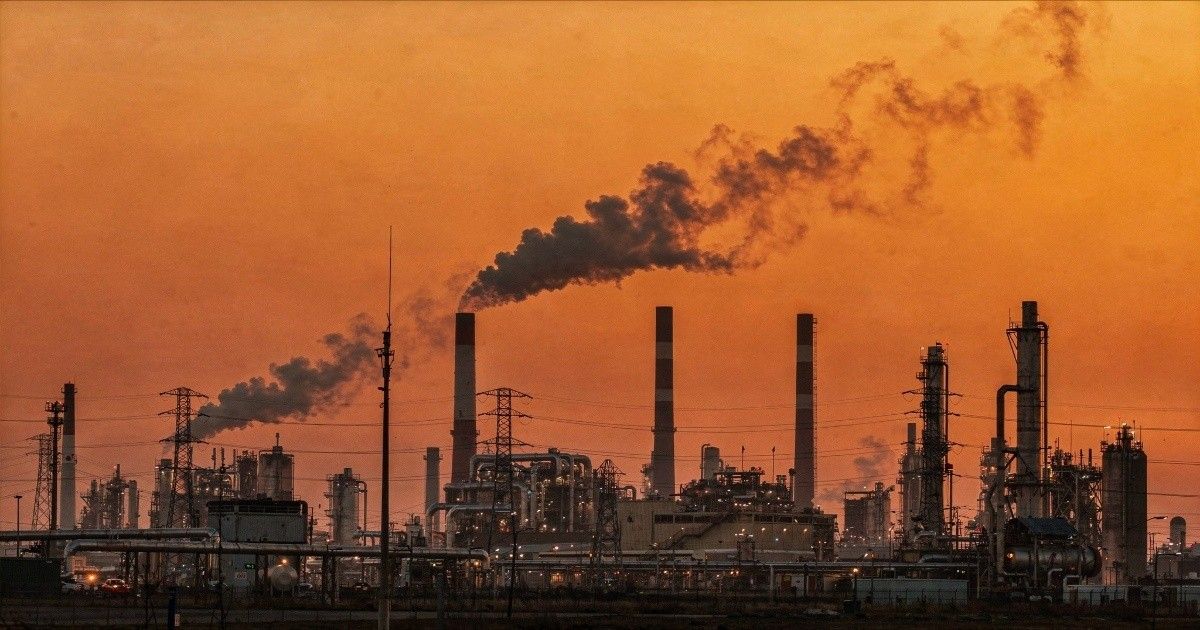
In today’s power industry, especially in thermal power plants, carbon emissions have become a serious environmental issue.
These emissions are mainly produced during the combustion of fossil fuels such as coal and natural gas, which are used to generate electricity.
Carbon Dioxide (CO₂) from Fossil Fuel Burning Power Plants
When fuels like coal, oil, and natural gas are burned, they emit carbon dioxide (CO₂) as a secondary product.
CO₂ is a greenhouse gas that retains heat in the atmosphere, leading to global warming and long-term climate changes.
Among these fuels, coal-based power plants generate the highest amount of CO₂ because coal contains a large proportion of carbon.
During the burning process inside boilers, this carbon combines with oxygen to form CO₂, which is then released through chimneys.
CO₂ Emissions from Coal-Fired Power Plants
Carbon dioxide (CO₂) emissions from thermal power plants are usually measured per unit of electricity generated (kWh). The emission levels can vary depending on the type of fuel and plant efficiency.
Typical Range: 740–1,689 gCO₂ /kWh
Common Average: 800–1,000 gCO₂ /kWh
India Average: 983 gCO₂ /kWh
Natural Gas Power Plant CO₂ Emissions
Natural gas power plants are comparatively cleaner. They typically emit between 290 and 930 gCO₂/kWh
Other Gases Emitted from Thermal Power Plants
These pollutants not only harm the environment but also affect the health of people living nearby. Long-term exposure can cause breathing problems, heart issues, and a shorter life.
Flue Gas contains
|
Major Gaseous Components |
Pollutants (Gases & Particles) |
|
Nitrogen |
Particulate Matter (Fly Ash/ Dust) |
|
Oxygen |
Sulphur Oxide (SOX) |
|
Carbon Dioxide |
Nitrogen Oxide (NOX) |
|
Water Vapour |
Carbon Monoxide (CO) |
|
Heavy Metals (Mercury can also present) |
Power Plant Pollution Beyond Carbon
While carbon dioxide (CO₂) is often the main focus in thermal power plants, it is not the only environmental concern. These plants also release other pollutants that affect air, water, and land quality.
Power Plant Air Pollution
Air pollution is the most visible and harmful form of pollution from a Thermal Power Plant.
Major pollutants include:
- Sulfur Oxide (SOx)
- Nitrogen Oxides (NOx)
- Particulate Matter (PM)
- Ash Particles
Impact:
Causes respiratory diseases
Leads to smog and reduced visibility
Contributes to acid rain and environmental damage
Power Plant Water Pollution
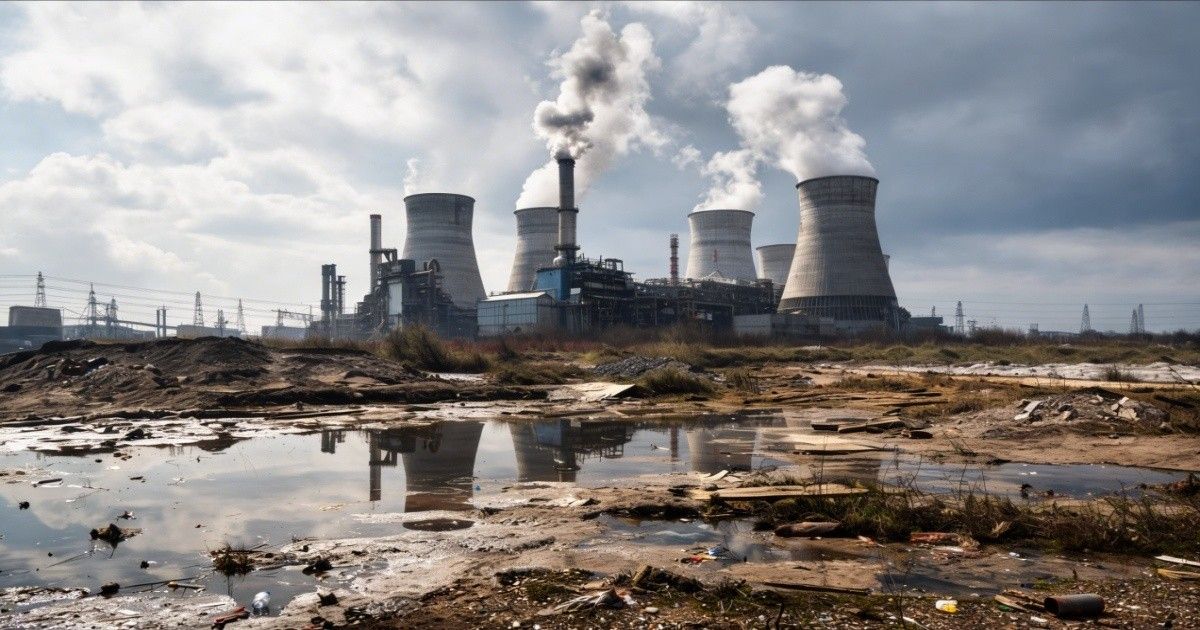
Thermal power plants need a large amount of water for cooling and steam production. If this water is not handled properly, it can result in water pollution and harm the surrounding environment.
Sources of water pollution:
- Discharge of hot water (thermal pollution)
- Release of chemicals and heavy metals
- Ash slurry disposal into water bodies
Impact:
Harms aquatic life
Reduces oxygen levels in water
Contaminates drinking water sources
Natural Gas Power Plant Pollution
Although cleaner than coal, natural gas plants are not completely pollution-free.
Emissions include:
- Lower levels of Carbon Dioxide
- Small amounts of Nitrogen Oxide
Impact:
Global Warming
Can affect air quality in surrounding areas
Power Plant Pollution Statistics
To understand the actual environmental impact of a thermal power plant, it is essential to analyze key pollution data.
Carbon Emissions
-
Coal-fired power plants: 800–1000 grams of Carbon Dioxide per kWh
-
Natural gas power plants: 350–500 grams of CO₂ per kWh
Air Pollutant Emissions
-
Sulfur Dioxide (SO₂): Without Control: 200 – 2000 mg/Nm³, With Control (FGD): 100 mg/Nm³
-
Nitrogen Oxides (NOₓ): Without Control: 300 – 1500 mg/Nm³, With Control (SCR/SNCR): 100 mg/Nm³
-
Particulate Matter (PM): Without Control: 50 – 500 mg/Nm³, With Control (ESP): 30 – 50 mg/Nm³
What Are Dangerous or Unpermitted Emission Levels?
In a Thermal Power Plant, emissions are considered dangerous or unpermitted when they exceed limits set by the Central Pollution Control Board.
Key Limits (For plants commissioned after Jan 1, 2017)
Particulate Matter (PM): 30 mg/Nm³
Sulfur Dioxide (SO₂): 100 mg/Nm³
Nitrogen Oxides (NOₓ): 100 mg/Nm³
When It Becomes Dangerous
Emissions above these limits
Pollution control systems not working
Emission Norms and Standards for Thermal Power Plants
Emission Norms for Thermal Power Plants
Thermal power plants must limit emissions of
- Particulate Matter (PM)
- Sulfur Dioxide (SO₂)
- Nitrogen Oxides (NOₓ)
Norms vary based on:
Plant age
Capacity
Fuel type
Stack Emission Standards for Thermal Power Plants in India
Stack emissions refer to pollutants released through chimneys.
CPCB Limits (New Plants)
Particulate Matter (PM): 30 mg/Nm³
Sulfur Dioxide (SO₂): 100 mg/Nm³
Nitrogen Oxides (NOₓ): 100 mg/Nm³
Emission Standards for Thermal Power Plants in India
|
Category |
PM (mg/Nm³) |
Mercury (Hg) (mg/Nm³) |
SO₂ (mg/Nm³) |
NOₓ (mg/Nm³) |
|
New (2015+) |
30 |
0.03 |
100 |
100 |
|
2003–2016 |
50 |
100-200 |
300-450 |
|
|
Before 2003 |
100 |
600 |
How to Reduce Carbon Dioxide and Other Emissions from Power Plants
- Improve Efficiency: Use supercritical/ultra-supercritical boilers less fuel, lower Carbon Dioxide
- Fuel Switching: Shift from coal to natural gas or renewable energy
- Carbon Capture: Apply Carbon Capture and Storage (CCS) to store CO₂
- Install Pollution Control Systems: Reduce SOX, NOX, PM
How to Reduce Mercury Emissions from Coal-Burning Power Plant
Activated Carbon Injection (ACI)
Absorbs mercury before it exits the stack
Electrostatic Precipitator (ESP)
Captures mercury attached to particles
Fabric Filters (Baghouse)
Improves removal of fine particles carrying mercury
Fuel Quality Control
Use low-mercury coal
Pollution Control Methods in Power Plants
Major Technologies:
- Electrostatic Precipitator (ESP)
- Flue Gas Desulfurization (FGD)
- Selective Catalytic Reduction (SCR) to reduce Nitrogen Oxide
- Cooling Towers to minimize thermal pollution
The Future: Zero or Negative Emission Power Plants
The future of power generation is moving towards zero or even negative emissions, where a Thermal Power Plant produces little to no pollution.
New Technologies:
Carbon Capture and Storage (CCS): Captures Carbon Dioxide before release
Biomass Co-firing: Can reduce or offset carbon emissions
Renewable Integration: Combine with solar/wind to cut fossil fuel use
Conclusion
Thermal power plants are still important to meet today’s energy needs, but their impact on the environment cannot be ignored.
Using cleaner technologies, following strict emission rules, and gradually shifting to renewable energy are important steps for a sustainable future.