Stacker Reclaimers of any bulk material handling system manage the flow of critical raw materials like coal, limestone and iron ore receiving them from conveyors, building orderly stockpiles and recovering them on demand to feed plant processes.
If a stacker reclaimer faces unplanned downtime, the entire material supply chain gets interrupted, directly affecting production targets.
At AVR Energies, we provide complete, practical operations and maintenance services for all types of stacker reclaimers. Our focus is on keeping your machines running reliably, reducing unexpected stops and extending the working life of every component.
Stacker Reclaimer Operations
We manage the full operational cycle of your stacker reclaimer, ensuring material moves smoothly from the incoming conveyor to the stockyard and then back to the plant as needed. Our trained operators handle the machine with precision and care.

- Receiving material from the upstream conveyor system and directing it to the correct stockpile area.
- Stacking material with proper pile formation to maximise storage capacity and minimise material segregation.
- Reclaiming material according to plant production schedules, ensuring a consistent feed rate.
- Monitoring conveyor belts, drives and slewing/ luffing movements to detect early signs of wear or misalignment.
- Watching control system parameters such as motor currents, travel speeds and boom angles to keep everything within safe limits.
- Performing walk-around inspections to check for loose bolts, unusual noises, or visible damage before they become problems.
We ensure a steady, uninterrupted flow of material to your plant, better stockyard utilisation, reduced material loss and a safer working environment for everyone.
Stacker Reclaimer Maintenance: A Three-Level Approach
We divide our maintenance work into three clear levels, each designed for a specific time frame and purpose. This structured approach ensures small issues are caught early, while major components get the deep attention they need during planned outages.
Routine daily checks
Every shift, our maintenance team carries out a set of basic but essential checks. These are quick visual and physical inspections that take only a few minutes but can prevent costly breakdowns later.
- Inspect conveyor belts for cuts, fraying, or uneven wear.
- Check oil levels and grease points on bearings, gearboxes and slew rings.
- Verify that sensors, limit switches and position indicators are reading correctly.
- Look over hydraulic hoses and electrical cables for signs of chafing or leakage.
- Listen for unusual grinding noises, excessive vibration, or hot spots on motors and gearboxes.
- Test emergency stop buttons and pull-cords to ensure they work instantly.

Scheduled preventive maintenance
On a weekly, fortnightly, or monthly basis, we carry out more thorough interventions. This is where we replace consumables, adjust critical alignments and refresh lubricants before they degrade.
- Lubricate all rotating equipment, including bucket wheel bearings, boom pulleys and travel drives.
- Inspect the bucket wheel, scraper chains and boom structure for wear or cracking.
- Check and adjust conveyor belt tracking to prevent edge damage and spillage.
- Tighten structural bolts and fasteners that may have loosened due to vibration.
- Test brakes, couplings and drive systems to ensure smooth engagement and stopping.
- Verify all safety interlocks, such as over-travel limits and slack rope detectors, are functioning correctly.
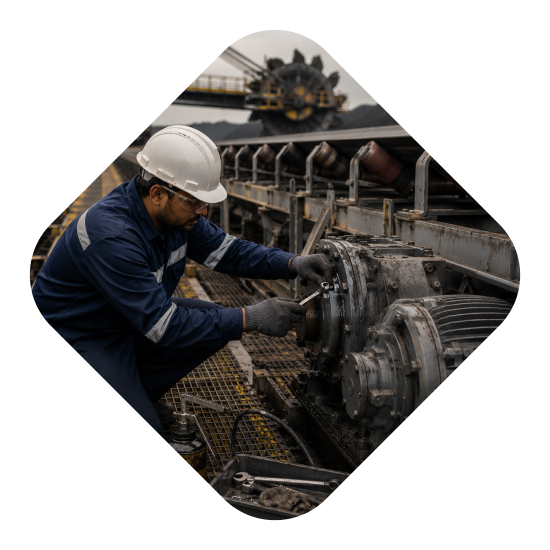
Major maintenance during shutdown
During planned plant outages (annual or capital overhauls), we perform deep-dive servicing that cannot be done while the machine is running. This level of work requires extended downtime but restores the machine to near‑new condition.
- Conduct a detailed structural inspection of the boom, portal and slewing platform for cracks or distortion.
- Overhaul gearboxes - drain old oil, inspect gears and bearings and refill with fresh lubricant.
- Service the bucket wheel drive, including replacing worn tyres, liners and discharge chutes.
- Inspect scraper systems and replace worn blades or chains.
- Replace worn conveyor components like idlers, pulleys and impact beds.
- Test all electrical panels, contactors and control wiring for insulation breakdown or loose connections.
- Carry out corrosion control and protective painting to prevent rust in harsh environments.
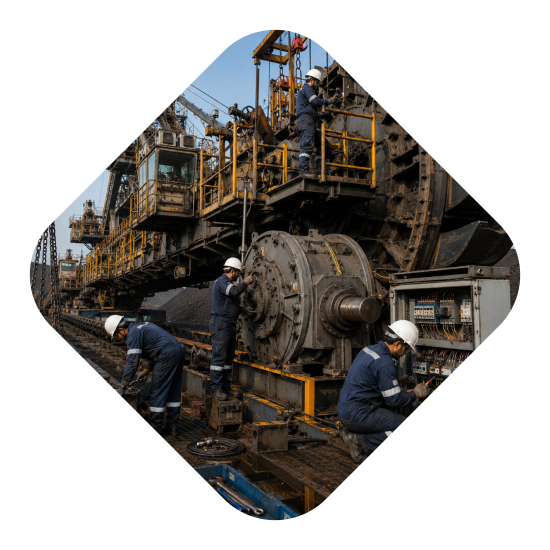
Key Operational Challenges We Address
Running a stacker reclaimer is not just about pushing buttons. There are real challenges that affect performance and equipment life. We tackle these head-on.
Swipe or use arrows to browse operational challenges
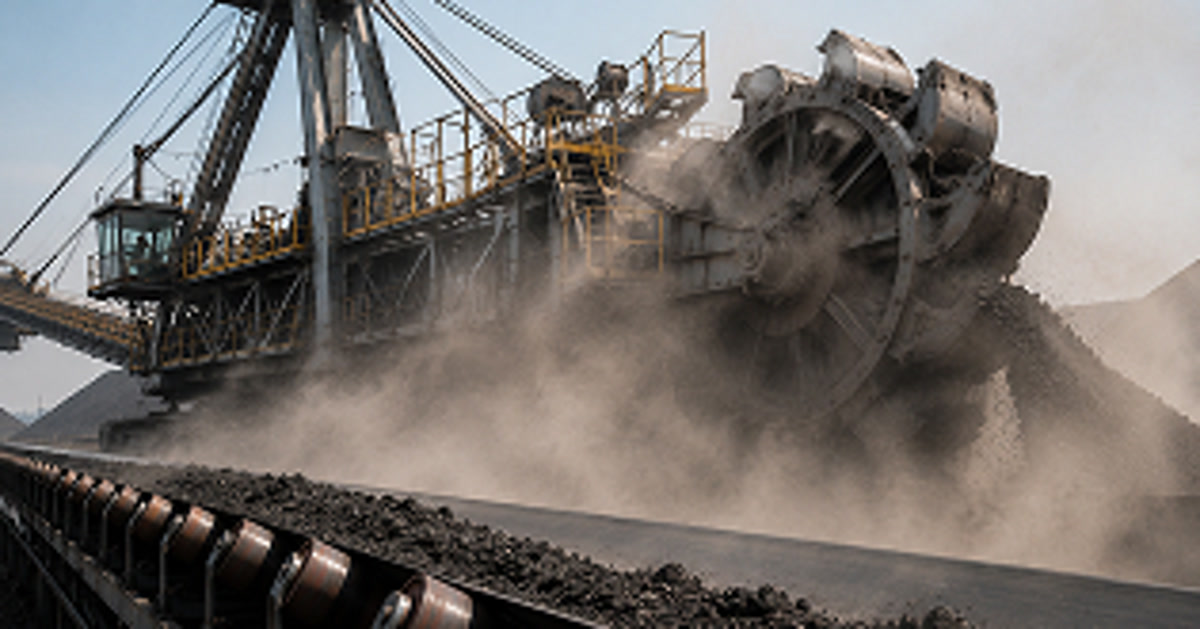
Dust and spillage
Bulk materials create dust that can clog sensors and damage moving parts. We implement regular cleaning schedules and check dust suppression systems.

Variable feed rates
Plant demand fluctuates. Our operators adjust reclaiming speeds and boom positions to match the required flow without overloading conveyors.

Material segregation
Improper stacking can cause fine particles to separate from coarse ones, affecting downstream processes. We train our team to build piles in layers to maintain blend quality.
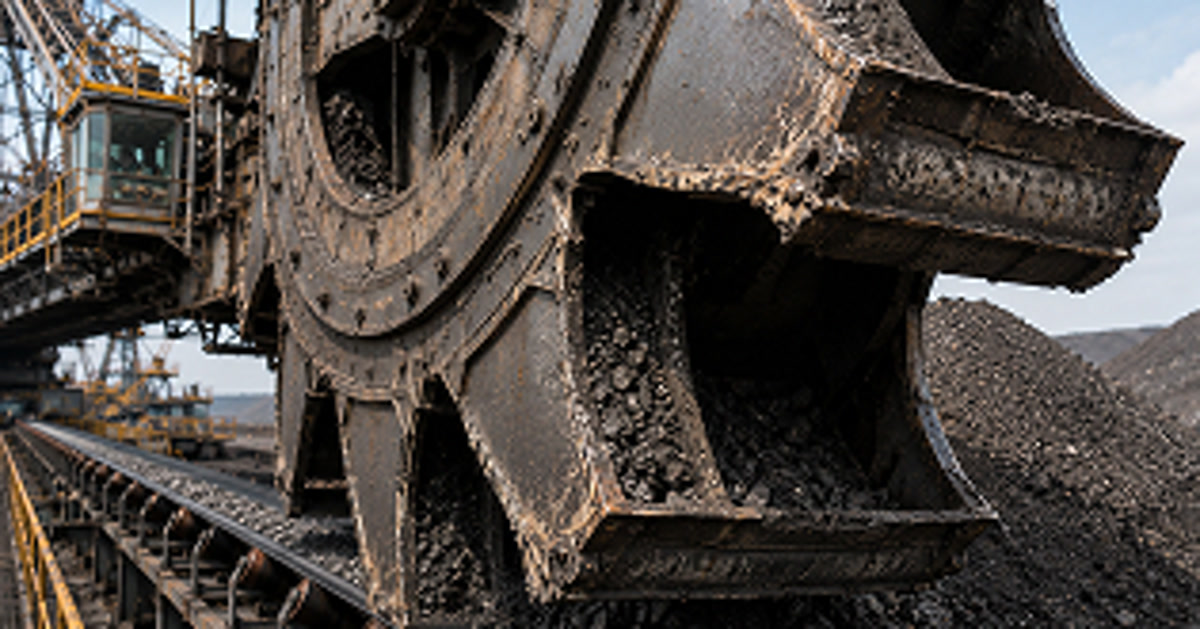
Wear and tear
Abrasive materials like iron ore and limestone wear down buckets, chutes and belts quickly. We monitor wear rates and replace parts proactively, rather than waiting for failure.
Types of stacker reclaimers we support
We have extensive experience with almost every type of stacker reclaimer used in power plants, steel plants, cement factories and mining operations.
Bucket Wheel Stacker Reclaimer (BWSR)
This is the most common type, using a rotating bucket wheel to scoop material from stockpiles while stacking and reclaiming continuously.
Operations:
- Control the slew speed of the boom carefully. Moving too fast causes the buckets to dig too deep and overload the drive. Moving too slowly reduces productivity.
- Match the bucket wheel's rotation speed to the material type - harder materials like iron ore require slower speeds than coal.
- Ensure the boom is positioned at the correct height to prevent the bucket wheel from digging into the ground or hitting the pile base.
Maintenance:
- Check bucket wheel tyres and liners regularly. They wear out quickly due to constant contact with abrasive material and need replacement before they wear through to the metal.
- Grease the slew ring bearing on a strict schedule to prevent seizing.
- Inspect the boom conveyor belt frequently, as it takes the full load of material dropped from the buckets.
- Monitor the bucket wheel drive gearbox for oil leaks and unusual noises.
Side Scraper Reclaimer
This machine uses scraper blades running along the side of the stockpile to pull material down onto a conveyor. It is simple and reliable, often used for limestone and coal.
Operations:
- Manage the scraper chain speed carefully. Too fast and it pulls down large chunks that clog the discharge chute. Too slow and the plant starves for material.
- Watch the pile's natural angle of repose. If the pile collapses unevenly, it can overload one side of the scraper.
- Ensure the scraper follows the pile profile correctly to maintain a steady reclaim rate.
Maintenance:
- Monitor scraper chains and blades daily - they are the primary wear items.
- Check chain tension daily and adjust it to prevent slack, which can cause derailment.
- Inspect guide rails along which the scrapers slide. These wear down and need periodic replacement.
- Check drive sprockets at the head and tail ends for tooth wear.
Single Boom Stacker
This machine only stacks material - it does not reclaim. It uses one boom conveyor to spread material evenly across the stockyard.
Operations:
- Coordinate the boom's luffing (up and down) and slewing (side to side) movements to build well-formed stockpiles.
- Keep the boom at the right height. Too high and material falls too far, causing segregation (fine particles separate from coarse ones). Too low and the pile does not grow evenly.
- Plan stacking patterns (chevron or windrow) to maximise storage capacity.
Maintenance:
- Check the luffing mechanism (hydraulic cylinder or winch) regularly. Change oil and inspect seals to prevent leaks.
- Inspect the boom conveyor's idlers and pulleys weekly for bearing wear and misalignment.
- Replace wear plates in the chute where material drops onto the boom conveyor when they thin out.
- Lubricate the boom pivot bearing periodically.
Twin Boom Stacker
With two booms, this stacker offers greater flexibility and much higher stacking capacity for large storage areas.
Operations:
- Coordinate both booms independently to fill different parts of the yard simultaneously without collision.
- Plan stacking sequences carefully using spatial awareness to avoid boom interference.
- Alternate between booms to create a large, stable pile using a chevron pattern.
Maintenance:
- Inspect the central transfer chute that diverts material to either boom. It takes heavy impact and needs frequent crack checks.
- Grease both boom pivot bearings on a strict schedule.
- Monitor the independent luffing drives (winches or hydraulic cylinders) for both booms to ensure they operate in sync when required.
- Check the slew ring and drive motors for both booms regularly.
Bridge Reclaimer
This machine spans across stockpiles like a bridge. Scrapers mounted on the bridge reclaim material from the pile below, making it excellent for blending.
Operations:
- Control the bridge's traverse speed along the length of the pile. Too fast reduces the reclaim rate; too slow overworks the scraper chains.
- For blending applications, cut across the entire pile face evenly to mix different layers of material.
- Monitor the scraper chain depth to avoid overloading the drive.
Maintenance:
- Inspect the bridge's drive wheels and rails monthly. Check wheel flange wear and rail alignment to prevent derailment.
- Monitor the long scraper chains daily for tension and lubricate them regularly.
- Inspect the bridge structure for cracks, especially at welded joints, during annual shutdowns.
- Check the drive gearboxes for oil levels and unusual vibrations.
Barrel Reclaimer
A rotating barrel with scraper blades continuously recovers material. It provides good homogenisation (uniformly blended bulk materials) and is often used in blending beds.
Operations:
- Set the barrel rotation speed to match the required reclaim rate.
- Watch the fill level inside the barrel. Overfilling can jam the drive and stop the machine.
- Ensure material collapses into the rotating barrel evenly from the pile above.
Maintenance:
- Grease the barrel's drive ring and support rollers regularly and check their alignment.
- Inspect scraper blades inside the barrel periodically and replace them when worn.
- Check the barrel shell for cracks, as it takes constant load from the material above.
- Inspect the discharge conveyor beneath the barrel for belt tracking issues.
Circular Stacker Reclaimer
Designed for circular stockyards, this machine saves space while offering high storage efficiency. It includes a stacking boom and a separate reclaiming bridge that rotates around a central column.
Operations:
- Manage the slewing stacker boom to build circular piles while controlling the slower rotation of the reclaiming bridge on the opposite side.
- Maintain a steady material flow while the reclaimer traverses the circular pile face.
- Balance stacking and reclaiming rates to avoid emptying or overfilling the yard.
Maintenance:
- Check the central column's main slew drive gearbox oil and slip ring brush wear quarterly.
- Inspect the rotating bridge's rail and wheel system at the outer edge for wear.
- Replace scraper blades on the bridge based on observed wear patterns.
- Lubricate the central column bearing and check for any play or misalignment.
Portal and Semi‑Portal Reclaimer
These machines move on rails above the stockpile and use scraper mechanisms for reclaiming. They cover very large areas and are built robustly for coal and ore.
Operations:
- Drive the portal along the length of the stockpile while managing the scraper system's depth of cut.
- Avoid digging too deep, as the drag force increases and can stall the drive.
- Read the pile profile and adjust the scraper height accordingly to maintain steady reclaim.
Maintenance:
- Inspect the rail-wheel system carefully. Monitor wheel flange wear and rail flatness.
- Check the trailing cable system (which powers the moving portal) regularly for abrasion and kinks.
- Inspect the scraper chain and its tensioning system daily for stretch and proper alignment.
- Check the portal structure for any signs of fatigue or cracking.
Radial Stacker Reclaimer
This machine rotates around a central pivot, creating large, fan‑shaped stockpiles. It offers flexible stockpile management.
Operations:
- Swing the boom in an arc to create a fan-shaped pile.
- Gradually raise the boom when stacking to build layers.
- When reclaiming (if equipped with a bucket wheel), travel the boom across the pile face systematically without digging too aggressively.
Maintenance:
- Lubricate the central pivot bearing strictly per the manufacturer's schedule - it takes the full weight of the boom and handles all slewing forces.
- Inspect the travel wheels at the outer end (if the machine moves on a track) for flat spots and bearing wear.
- Check the boom structure for fatigue cracks during annual inspections.
- Monitor the bucket wheel drive (if applicable) for wear on tyres and liners.
Blender Reclaimer
This type is specifically designed to blend materials from different layers of a stockpile during reclaiming, ensuring consistent feed quality.
Operations:
- Control the reclaimer's traverse speed and the angle of cut to achieve the desired blend ratio.
- Cut across the entire face of the pile, not just the top, to mix older and newer layers properly.
- Adjust speed precisely - rushing causes poor blending.
Maintenance:
- Keep scraper blades sharp and correctly angled to cut cleanly through layers without clogging.
- Check the drive mechanisms for the oscillating (up-down) or traversing (side-side) motion regularly for alignment.
- Focus on the discharge conveyor's belt tracking and chute condition to prevent spillage of the mixed material.
- Lubricate all pivot points and guide rails to maintain smooth movement.
Benefits of our approach to stacker reclaimer services
Choosing AVR Energies for your operations and maintenance needs brings clear, measurable advantages.
Swipe or use arrows to browse benefits
Higher machine availability
Our preventive approach means fewer sudden breakdowns. Your machine stays productive when you need it most.

Lower maintenance costs
Catching wear early avoids expensive, catastrophic failures. Planned work is always cheaper than emergency work.

Improved safety
Regular checks on interlocks, brakes and emergency systems protect your operators and nearby personnel.

Better material quality
Proper stacking and reclaiming techniques reduce segregation, giving your plant a more consistent feed.

Extended equipment life
Timely lubrication, alignment and component replacement add years to the service life of your stacker reclaimer.