
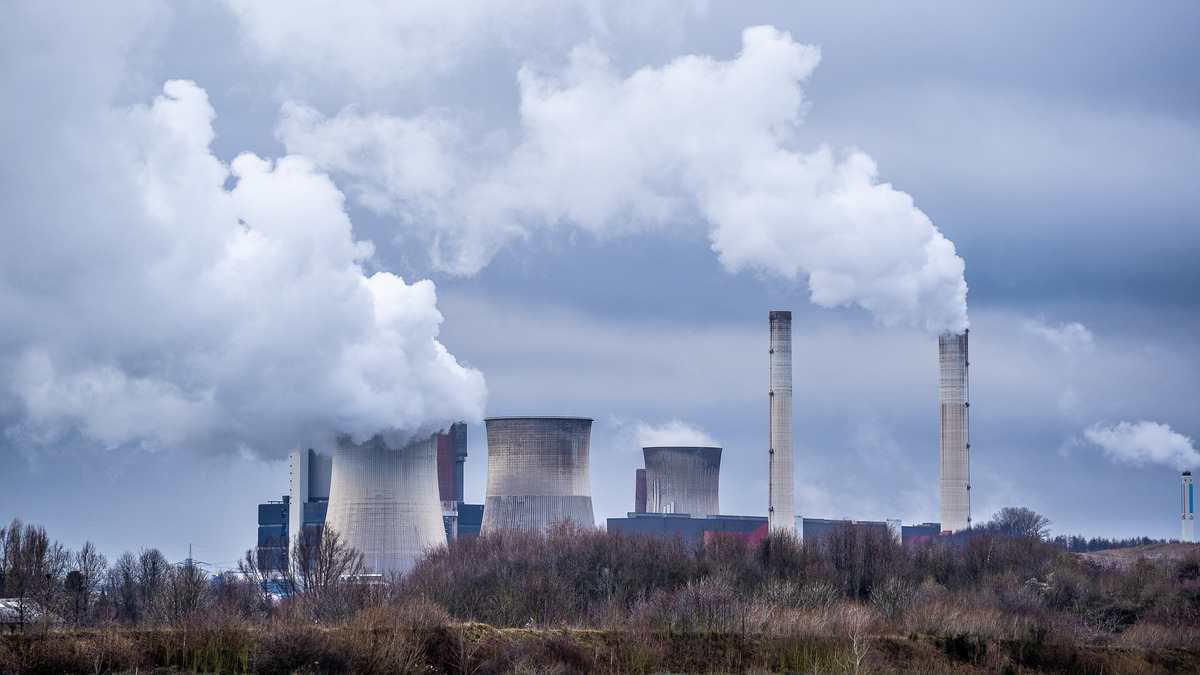
An Ash Handling System (AHS) collects, transports, stores and disposes of ash produced during coal combustion. It helps maintain smooth boiler and plant operation.
During coal combustion, a large amount of ash is produced. That removes this ash from the boiler and collects it at designated locations. It prevents ash blockage in equipment, reduces dust pollution.
Types of Ash Generated in Coal-Fired Power Plants
Coal combustion mainly produces three types of ash: Fly Ash, Bottom Ash and Bed Ash.
Fly ash consists of fine particles carried with flue gases and collected mainly by the ESP.
Bottom ash is heavier ash that settles at the bottom of the boiler furnace.
Bed ash is generated in FBC boilers and settles at the bottom of the combustion bed.
Types of Ash Handling Systems Used in Thermal Power Plants
Mechanical Ash Handling System:
Uses mechanical equipment such as belt conveyors, screw conveyors and chain conveyors to transport ash from one location to another.
Hydraulic Ash Handling System:
Uses water to mix and transport ash as slurry through pipelines or channels to the disposal area.
Pneumatic Ash Handling System:
Uses air pressure or vacuum to transport dry ash through pipelines, mainly from ESP hoppers to storage silos
Types of Pneumatic Ash Handling Systems
Pneumatic Ash Handling Systems are classified into vacuum and pressure conveying systems.
The Vacuum System uses negative air pressure to suck ash through pipelines, while the Pressure System uses positive air pressure to push ash towards storage silos.
Based on ash concentration and air velocity, pneumatic conveying is further classified into Dense Phase, which uses low air velocity and high ash concentration and Lean Phase, which uses high air velocity and low ash concentration.
Wet Ash Handling System
Uses water to cool, collect and transport ash in slurry form through pipelines or channels.
Dry Ash Handling System
Uses mechanical conveyors or pneumatic systems to collect and transport ash without using water. It also helps maintain fly ash quality for further utilization.
Working Principle of an Ash Handling System
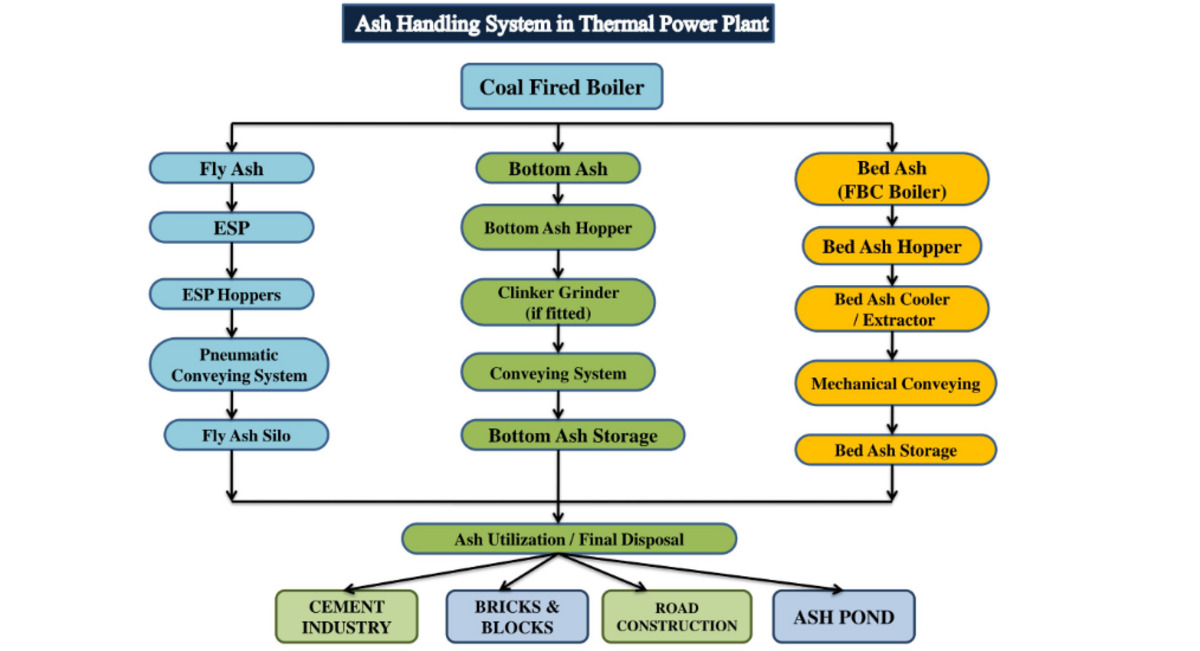
An Ash Handling System collects ash produced during coal combustion and transports it to storage or disposal areas.
Fly ash is collected from flue gases through ESP hoppers and transported through pneumatic conveying systems, while bottom ash settles in the boiler furnace hopper and is removed using water or mechanical equipment.
The collected ash is then conveyed through pipelines or conveyors to storage facilities.Fly ash is stored in specially designed silos, while bottom ash is kept in designated storage areas.
The stored ash is transported for industrial use, such as cement manufacturing, or sent to approved disposal areas, such as ash ponds, as per environmental requirements.
Fly Ash Handling System in Thermal Power Plants
Fly Ash Collection Through Electrostatic Precipitators (ESP)
Fly ash particles are carried with flue gases and collected in the ESP using an electrostatic charging process.
The ESP applies a high voltage negative charge to the ash particles (Emitting Electrode), forcing them to migrate toward and stick to oppositely charged grounded plates (Collecting plates).
The collected ash falls into ESP hoppers, from where it is discharged for further transportation.
Fly Ash Pneumatic Conveying System
The collected fly ash is transported from ESP hoppers to storage silos through pipelines using compressed air or vacuum. This system provides enclosed and efficient transportation while reducing dust emissions.
Fly Ash Storage and Silo Operations
Fly ash is stored in specially designed silos after pneumatic transportation. The silos are equipped with level indicators, dust filters, aeration systems and discharge arrangements. Stored fly ash is then supplied to cement and other industries or transported for safe disposal as per plant requirements.
Bottom Ash Handling System
The Bottom Ash Handling System collects and removes heavy ash that settles at the bottom of the boiler furnace.
Wet Bottom Ash Handling System
This system uses water to cool and collect hot bottom ash in the furnace hopper. The ash is mixed with water and transported as slurry to the disposal area.
Dry Bottom Ash Handling System
This system removes bottom ash without using water. It uses mechanical conveyors to cool, collect and transport ash for storage or further utilization.
Clinker Grinder and Bottom Ash Conveyors
A clinker grinder crushes large ash lumps and clinkers into smaller particles to prevent pipeline or conveyor blockage. Bottom ash conveyors transfer the crushed ash to storage or disposal areas.
Bottom Ash Disposal and Management
Collected bottom ash is transported to designated storage or disposal areas. It can also be reused in concrete Production, Road Base aggregate cement manufacturing and other applications. Proper management helps reduce environmental pollution and ensures safe disposal.
Water Management: Control water consumption and recycle water wherever possible in wet systems.
Safe Storage: Store bottom ash in designated areas (ash pond) to prevent ash spreading and leakage.
Ash Utilization: Reuse suitable bottom ash in road construction, building materials and other applications.
Dust Control: Prevent dust emissions during dry ash handling and transportation.
Environmental Protection: Prevent contamination of soil and nearby water bodies.
Bed Ash Handling System
The Bed Ash Handling System collects and removes ash generated in Fluidized Bed Combustion (FBC) boilers.
Bed Ash Collection and Transportation
Bed ash collects at the bottom of the fluidized bed. It is discharged through bed ash outlets and passes through a bed ash cooler to reduce its temperature. After cooling, screw conveyors or drag chain conveyors transport the ash to a storage hopper or disposal area.
Bed Ash Removal Equipment
Equipment such as
Bed Ash Cooler: Reduces the temperature of hot bed ash.
Screw Conveyor: Moves cooled ash from the discharge point.
Rotary Airlock Valve: Controls ash discharge and maintains system sealing.
Drag Chain Conveyor: Transfers ash to storage or disposal areas.
Ash Hopper: Collects ash before further transportation.
Ash Handling System Diagram and Plant Layout
Major Equipment Used in an Ash Handling Plant
ESP Hoppers and Ash Hoppers: Collect fly ash from ESP fields and ash from boiler collection points.
Vacuum Pumps and Air Compressors: Vacuum pumps create suction, while air compressors supply compressed air for pneumatic ash transportation.
Ash Conveying Pipelines: Carry ash from collection hoppers to storage silos using air pressure or vacuum.
Rotary Airlock Valves and Dome Valves: Control ash flow and help maintain proper air sealing during transportation.
Clinker Grinders: Crush large bottom ash lumps and clinkers into smaller particles to prevent blockages.
Ash Silos and Storage Equipment: Store collected fly ash safely before its transportation, utilization or disposal.
Operation and Maintenance of Ash Handling Systems
Daily Operation and Monitoring
Check hopper levels, conveyor operation, pipeline pressure, compressor performance, pump condition and silo levels. Monitor leakage, noise and vibration.
Preventive and Predictive Maintenance
Perform regular inspection, cleaning, lubrication and replacement of worn-out parts. Use vibration and temperature monitoring to identify early faults.
Common Problems and Their Solutions
Common problems include pipeline blockages, conveyor failures, ash leakage and silo discharge issues.
Ash Pipeline Blockages
Blockages may occur due to moisture, ash buildup or low air pressure. Check conveying pressure and clear blockages using approved procedures.
Conveyor and Chain Failures
Conveyor failures may occur due to overloading, poor lubrication, misalignment or worn-out parts. Regular conveyor system maintenance is essential to prevent breakdowns.
Ash Leakage and Dust Emissions
Leakage may occur due to damaged seals, loose joints or faulty valves. Repair leaks and maintain proper sealing to control dust.
Silo Blockages and Ash Discharge Problems
Moisture and ash compaction can restrict discharge. Check aeration systems, valves and discharge arrangements.
Safety Measures During Ash Handling Plant Operations
Follow PTW and LOTO procedures, wear proper PPE and avoid contact with hot ash. Never open pressurized pipelines or equipment without proper isolation.
Advantages of an Efficient Ash Handling System
An efficient Ash Handling System ensures continuous ash removal and improves overall power plant reliability. It reduces manual handling, labour requirements and power plant maintenance costs through automated operation.
It also controls dust emissions, helps prevent environmental pollution and supports the safe storage, transportation, reuse and disposal of ash in industries such as cement manufacturing and road construction.
Ash Handling Systems FAQ
What Is the Difference Between Fly Ash and Bottom Ash?
Fly ash consists of fine ash particles carried with flue gases and collected by the ESP, while bottom ash is heavier ash that settles at the bottom of the boiler furnace.
Which Ash Handling System Is Commonly Used in Thermal Power Plants?
Pneumatic conveying systems are commonly used for fly ash, while wet or dry mechanical systems are used for bottom ash. The selection depends on the plant design and requirements.
What Is the Difference Between Wet and Dry Ash Handling?
Wet ash handling uses water to transport ash in the form of slurry, whereas dry ash handling uses mechanical conveyors or pneumatic systems without water.
What Equipment Is Used in an Ash Handling Plant?
Major equipment includes ESP hoppers, ash hoppers, air compressors, vacuum pumps, conveying pipelines, rotary airlock valves, clinker grinders, conveyors and ash storage silos.