
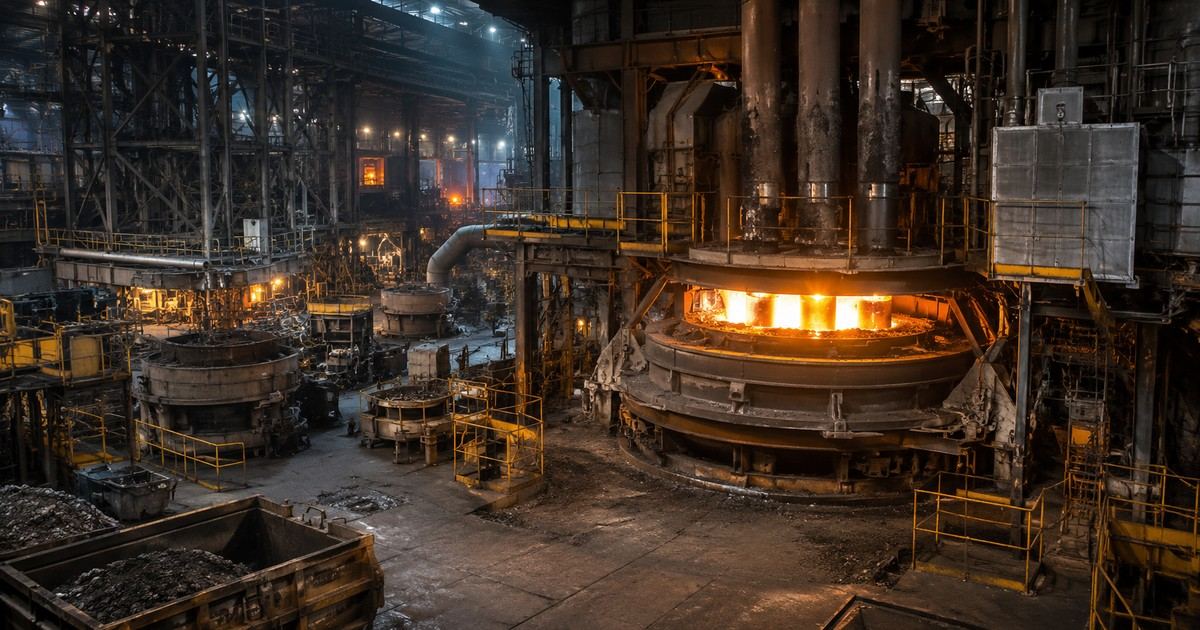
Ferroalloy furnaces are industrial electric furnaces used to produce ferroalloys such as ferromanganese, ferrosilicon and ferrochrome.
In these furnaces, raw materials like ores, coke and other additives are heated to very high temperatures using electrical energy. The heat enables the reduction reactions required to produce the desired alloy.
The most commonly used furnace is the Submerged Arc Furnace (SAF), where electrodes are submerged in the charge material to generate heat. Proper operation of the furnace is important for stable production, energy efficiency and equipment safety.
Common problems include electrode breakage, power fluctuations, refractory damage, cooling-system issues, and unstable furnace operation.
Types of Furnaces Used in Ferroalloy Plants
Ferroalloy plants mainly use electric furnaces to produce different ferroalloys. The Submerged Arc Furnace (SAF) is the most commonly used furnace because it can provide the high temperature and electrical power required for the reduction of metal ores.
Submerged Arc Furnace (SAF)
A Submerged Arc Furnace (SAF) is an electric furnace in which electrodes are submerged into the raw material charge. Electrical current passes through the electrodes and charge material, producing intense heat inside the furnace.
This heat helps reduce the metal oxides and produces the required ferroalloy.
How a Submerged Arc Furnace Works
Raw materials such as ore, coke and fluxes are charged into the furnace. The electrodes are lowered into the charge and a high electrical current is supplied through them.
The electrical resistance of the charge generates heat, which causes the reduction reactions. The molten ferroalloy collects at the bottom of the furnace and is periodically tapped.
Typical Ferroalloys Produced in SAFs
SAFs are commonly used to produce ferrosilicon (FeSi), ferromanganese (FeMn), silicomanganese (SiMn) and ferrochrome (FeCr). The type of alloy depends on the raw materials, furnace design and operating conditions.
Open, Semi-Closed and Closed SAFs
SAFs can be classified as open, semi-closed and closed based on how the furnace gases are handled.
Open SAFs release furnace gases directly, while semi-closed SAFs provide partial gas collection. Closed SAFs are fully sealed and allow furnace gases to be collected and reused, which improves environmental performance and energy recovery.
Electric Arc Furnace (EAF)
An Electric Arc Furnace (EAF) is an electric furnace that uses an electric arc to generate very high temperatures for melting and processing metals.
Unlike a Submerged Arc Furnace, the electrodes in an EAF generally form an arc above the charge and the heat from the arc melts the material.
How an EAF Works
Raw materials are charged into the furnace, and the electrodes are lowered toward the material.
When electrical current flows through the electrodes, an electric arc is created. The arc produces intense heat, which melts the charge and allows the required metallurgical reactions to take place. The molten metal is then tapped from the furnace.
EAF Applications in Ferroalloy Production
EAFs can be used for producing or refining certain ferroalloys and for melting ferroalloy materials.
They are particularly useful when high temperature, precise control, and melting flexibility are required. However, the exact furnace type depends on the ferroalloy and production process.
AC and DC Electric Arc Furnaces
AC EAFs normally use three electrodes and three-phase alternating current. They are widely used because of their simple and established design.
DC EAF generally uses one electrode and a conductive bottom electrode, with direct current flowing through the furnace.
DC furnaces can provide stable arc operation and may reduce electrode consumption.
EAF vs Submerged Arc Furnace
The main difference is the location of the electric arc. In an EAF, the arc is mainly formed above the charge and is used primarily for melting.
In an SAF, the electrodes are submerged in the charge and heat is generated within the charge through electrical resistance and submerged arcs.
SAFs are widely used for the continuous production of ferroalloys, while EAFs are more commonly associated with melting and refining applications.
Blast Furnace
A Blast Furnace (BF) is a tall vertical furnace used for producing molten iron and certain ferroalloys.
It uses a combination of iron-bearing raw materials, coke, and hot air to generate the heat and reduce the atmosphere required for the process.
How Blast Furnaces Work
Raw materials are charged from the top of the furnace, while hot air (blast) is supplied from the bottom through tuyeres.
The coke burns and produces heat and reducing gases. These gases react with metal oxides and reduce them to molten metal, which collects at the bottom and is periodically tapped.
Ferroalloys Produced Using Blast Furnaces
Blast furnaces can be used to produce some ferroalloys, particularly ferromanganese (FeMn) and ferrochrome (FeCr). The choice depends on the required alloy, raw material characteristics and production process.
Blast Furnace vs Electric Furnace
A blast furnace mainly uses coke combustion and hot air to generate heat and reduce the ore, whereas an electric furnace uses electrical energy. Electric furnaces generally provide better control over furnace conditions and are more flexible for different ferroalloy grades.
Blast furnaces can be suitable for large-scale continuous production where the required raw materials and process conditions are available.
Advantages and Limitations
Blast furnaces can provide continuous operation, high production capacity and good thermal efficiency. However, they require a steady supply of suitable coke and raw materials and produce significant process gases and emissions.
Their operation is also less flexible compared with many electric furnace processes.
Other Furnace Types Used for Ferroalloy Production
Apart from SAFs, EAFs, and blast furnaces, other furnace types are also used for specific ferroalloy melting, refining and processing requirements.
The choice depends on the type of alloy, production capacity, raw materials and required process conditions.
Induction Furnaces
Induction furnaces use electromagnetic induction to heat and melt metal. They provide good temperature control and are mainly used for melting, refining and producing special ferroalloy grades.
Rotary Kilns and Rotary Hearth Furnaces
Rotary kilns are rotating cylindrical furnaces used for heating, calcination and pre-reduction of raw materials.
Rotary hearth furnaces heat material placed on a rotating hearth and can be used for pre-reduction and processing of metal-bearing materials before further melting.
Plasma Furnaces
Plasma furnaces use a high-temperature plasma arc as the heat source. They can provide very high temperatures and precise heat control, making them suitable for specialized melting, refining and recovery applications.
Refining and Ladle Furnaces
Refining furnaces and ladle furnaces are mainly used after primary melting to adjust the composition, temperature and quality of the molten ferroalloy.
They help remove unwanted impurities and achieve the required final alloy specification.
Ferroalloy Furnace Types by Alloy
Different ferroalloys require different raw materials, temperatures and reduction conditions. Therefore, the furnace type and operating conditions are selected according to the specific alloy being produced.
Ferro Manganese Furnaces
Ferro Manganese (FeMn) is mainly produced in Submerged Arc Furnaces (SAFs). Manganese ore, carbonaceous reductants and fluxes are heated at high temperature to reduce manganese oxides and produce molten ferro manganese.
Silico Manganese Furnaces
Silico Manganese (SiMn) is commonly produced in SAFs. Manganese ore, quartz or silica and carbon reductants are used as raw materials. The furnace provides the high temperature required to reduce manganese and silicon and form the alloy.
Ferro Silicon Furnaces
Ferro Silicon (FeSi) is generally produced in SAFs using quartz or silica, iron-bearing materials and carbon reductants. High electrical power is required because silicon reduction needs very high temperatures.
Ferro Chrome Furnaces
Ferro Chrome (FeCr) is commonly produced using SAFs. Chromite ore is reduced with a carbon-based reductant at high temperature to produce ferrochrome.
Furnace design and operating conditions depend on the required chromium content and alloy grade.
Other Ferroalloy Furnace Applications
Other ferroalloys such as ferrovanadium, ferrotitanium, ferromolybdenum and ferrotungsten may require specialized electric furnaces, refining furnaces or other melting processes.
The selection depends on the alloy's melting temperature, raw materials, required purity and production method.
Common Problems in Ferroalloy Electric Furnaces
Electrode-Related Problems
Electrodes are one of the most important components of a ferroalloy electric furnace because they carry high electrical current into the furnace. Their condition, position and proper operation directly affect furnace stability, power consumption and production.
Any electrode-related problem can lead to unstable operation, equipment damage and production loss
Electrode Breakage
Electrode breakage occurs when an electrode cracks or breaks during furnace operation.
It can happen due to mechanical stress, thermal shock, improper electrode operation, or excessive current. Electrode breakage can disturb furnace operation and may require shutdown or corrective ferro alloy plant maintenance.
Electrode Slipping Problems
Electrode slipping means the electrode does not move downward or upward as required.
Problems in the electrode slipping mechanism, clamps, hydraulic system or control system can cause improper electrode movement.
This can affect the electrical resistance and furnace power.
Electrode Consumption
Electrodes are gradually consumed during furnace operation.
High electrode consumption can increase operating costs and indicate problems such as excessive oxidation, improper operating conditions or poor electrode quality. Proper furnace control helps maintain optimum electrode consumption.
Electrode Positioning and Alignment Issues
Correct electrode positioning and alignment are essential for stable current distribution and uniform furnace operation.
Misalignment can cause uneven heating, abnormal current distribution, mechanical stress and increased risk of electrode damage.
Regular inspection and proper electrode adjustment help prevent these problems.
Furnace Lining and Refractory Problems
Refractory Wear
Refractory wear occurs gradually due to high temperature, chemical reactions, abrasion and contact with molten material.
Excessive wear reduces the thickness of the protective lining and can expose the furnace shell to high temperatures.
Furnace Lining Cracks
Furnace lining cracks can develop due to thermal shock, repeated heating and cooling, mechanical stress or refractory deterioration.
Cracks may allow heat or molten material to reach deeper layers of the lining and, in severe cases, damage the furnace shell.
Localized Overheating
Localized overheating occurs when excessive heat is concentrated in a particular area of the furnace.
It can be caused by uneven charge distribution, abnormal electrical conditions or damaged refractory. Continuous overheating can accelerate refractory wear and create serious operational risks.
Furnace Bottom and Hearth Problems
The furnace bottom and hearth are exposed to high temperature and molten alloy for long periods.
Erosion, cracking, penetration of molten material and excessive wear can damage these areas. Regular inspection and monitoring of furnace conditions are important to detect problems early and maintain safe furnace operation.
Electrical Problems in Ferroalloy Electric Furnaces
Electrical systems are critical for ferroalloy furnace operation because the furnace requires very high electrical power. Electrical problems can cause unstable furnace operation, equipment damage, production loss and safety risks.
Regular monitoring of current, voltage, transformer condition and electrical connections is therefore important.
Electrode Current Imbalance
Electrode current imbalance occurs when the current carried by different electrodes is not properly balanced.It can result from incorrect electrode positioning, uneven charge conditions or electrical system problems.
This may cause uneven heating and unstable furnace operation.
Transformer Problems
The furnace transformer supplies the required high current at a suitable voltage.
Problems such as overheating, insulation failure, oil deterioration, bushing damage or abnormal temperature can affect furnace operation and may lead to an unplanned shutdown.
Power Fluctuations
Power fluctuations occur when furnace power changes unexpectedly during operation.
They can be caused by unstable furnace resistance, electrode movement, charge conditions or electrical faults.Excessive fluctuations can affect production stability and power quality.
Short Circuits and Arcing Problems
Short circuits and abnormal arcing can occur due to unwanted contact between energized parts or improper electrical conditions.
They can produce high fault currents, excessive heat and equipment damage. Proper protection systems are essential to detect and clear such faults quickly.
Busbar and Electrical Connection Issues
Busbars and electrical connections carry very high currents and must have proper contact and cooling.
Loose connections, overheating, corrosion or damaged joints can increase resistance and cause hot spots, power losses and possible electrical failures. Regular inspection and thermal monitoring help identify these problems early.
Raw Material and Charge Problems
Incorrect Charge Composition
Incorrect charge composition means the required ratio of ore, reductant, flux and other materials is not maintained.
This can disturb the chemical reactions, affect alloy composition, increase power consumption and reduce production efficiency.
Poor Raw Material Sizing
Raw materials should have a suitable and consistent particle size.
Oversized or undersized material can affect gas flow, electrical resistance and the reduction process, leading to unstable furnace operation.
Excessive Fines
Fines are very small particles present in the raw material. Excessive fines can reduce the permeability of the charge, restrict gas movement, increase dust generation and disturb furnace operation.
Moisture in Raw Materials
Excessive moisture in raw materials can consume energy for evaporation and may affect furnace temperature and charging conditions. Sudden release of moisture can also create operational and safety problems.
Poor Burden Distribution
Burden distribution refers to how raw materials are distributed inside the furnace.
Poor distribution can create uneven electrical resistance, localized heating and unstable reduction reactions.
Proper charging helps maintain uniform furnace operation.
Slag-Related Problems
Incorrect Slag Composition
Incorrect slag composition can affect the chemical reactions and separation of the ferroalloy.
It may result from improper raw material or flux addition and can reduce metal recovery and alloy quality.
Excessive Slag Formation
Excessive slag formation increases the amount of material that must be handled and can reduce furnace capacity. It may also increase energy consumption and metal losses.
Poor Slag Fluidity
Poor slag fluidity means the slag does not flow easily at the operating temperature. This can be caused by unsuitable composition or low temperature, making slag separation and tapping difficult.
Slag Buildup
Slag buildup can occur inside the furnace when slag does not drain properly. It can reduce the effective furnace volume, disturb furnace operation and make tapping more difficult.
Difficulty in Slag Tapping
Difficulty in slag tapping occurs when slag cannot be removed smoothly from the furnace. Blocked tap holes, poor slag fluidity, or improper tapping conditions can cause this problem and may lead to unstable furnace operation.
Furnace Gas and Off-Gas Problems
Excessive Furnace Gas Generation
Excessive gas generation can occur due to changes in raw materials, moisture, furnace conditions or the reduction process.
High gas production can overload the gas-handling system and affect furnace pressure and operation.
Gas Leakage
Gas leakage can occur from furnace covers, ducts, joints or other connections. It can release hot gases and harmful substances into the working area, creating safety and environmental risks.
Regular inspection and proper sealing are essential.
Dust and Particulate Emissions
Furnace operation can generate dust and fine particles from raw materials and the reduction process.
If these particles are not properly captured, they can increase workplace pollution and atmospheric emissions.
Blockage in Off-Gas Systems
Dust accumulation can cause blockage in off-gas ducts, hoods and pipelines. Blockages reduce gas flow and can increase furnace pressure, affecting the performance of the gas-cleaning system.
Problems with Bag Filters and Gas Cleaning Systems
Bag filters and gas-cleaning systems remove dust and other pollutants from furnace gases. Problems such as damaged filter bags, high differential pressure, poor cleaning or fan failure can reduce gas-cleaning efficiency and increase emissions.
Cooling System Problems
Cooling systems are used to protect furnace components from excessive heat. Proper cooling is essential for the safe and continuous operation of ferroalloy electric furnaces. Any cooling problem can cause overheating, equipment damage, and unplanned shutdowns.
Water Leakage
Water leakage can occur from cooling pipes, panels, hoses or connections due to damage, corrosion or loose joints.
Leakage can reduce cooling efficiency and may create serious safety risks when water comes into contact with hot furnace areas
Cooling Panel Failures
Cooling panel failure can occur due to overheating, corrosion, cracking or physical damage. A damaged cooling panel may not remove heat properly, increasing the temperature of the furnace structure.
Cooling System Blockage
Cooling system blockage can restrict water flow through pipes and panels. Deposits, scale, rust or foreign particles can cause blockage and reduce heat transfer, resulting in localized overheating.
High Cooling-Water Temperature
High cooling-water temperature indicates that the cooling system is not removing heat effectively. It may be caused by low water flow, high furnace heat load, poor heat exchanger performance or inadequate cooling capacity.
Continuous high temperature can damage furnace components.
Tapping and Casting Problems
Taphole Blockage
A taphole blockage occurs when the molten metal or slag cannot flow properly through the tapping opening.
It may be caused by solidified material, improper tapping conditions, or buildup around the taphole. This can delay tapping and disturb furnace operation.
Irregular Tapping
Irregular tapping means the molten metal is not tapped at the required rate or interval. It can result from taphole problems, unstable furnace conditions or improper tapping practices, leading to changes in furnace level and production stability.
Metal and Slag Separation Problems
Proper separation of metal and slag is necessary to maintain alloy quality and metal recovery. Poor separation can cause excessive slag in the metal or loss of valuable alloy with the slag.
Tapping Temperature Issues
The molten alloy must be tapped at a suitable temperature to ensure proper flow and handling. Low temperature can cause poor flow or solidification, while excessively high temperature can increase refractory wear and energy losses.
Casting Defects
Casting defects such as cracks, uneven surfaces, porosity or improper shape can occur due to unsuitable casting temperature, cooling conditions, mould problems or improper casting practices.
These defects can affect the quality and usability of the final ferroalloy product.
Common Problems in Blast Furnace Ferroalloy Production
Blast furnace operation depends on proper charging, hot-blast supply, refractory condition, slag control and stable gas flow.
Problems in any of these areas can reduce production efficiency, increase energy consumption and affect ferroalloy quality.
Burden and Charging Problems
Incorrect burden composition, raw material size, moisture or charging distribution can disturb gas flow and chemical reactions inside the furnace. This may lead to uneven heating, poor reduction and unstable furnace operation.
Tuyere and Hot-Blast Problems
Tuyeres supply hot air into the furnace. Blockage, damage, leakage or uneven air distribution can affect combustion and temperature inside the furnace. Problems with the hot-blast system can reduce furnace efficiency and production.
Refractory Wear
Refractory lining protects the furnace shell from high temperature and molten metal. Continuous thermal and chemical attacks can cause wear, cracks and erosion.
Severe refractory damage can result in heat loss and unsafe furnace conditions.
Slag Formation and Tapping Problems
Incorrect slag composition or temperature can cause poor slag fluidity and slag buildup. Blocked tap holes or irregular tapping can disturb the furnace level and affect the separation of molten metal and slag.
Furnace Gas and Pressure Problems
Proper gas flow and furnace pressure are necessary for stable operation. Gas leakage, excessive pressure, poor gas flow or blockage in the gas system can affect heat transfer, reduction reactions, and furnace safety.
Irregular Furnace Operation
Irregular furnace operation may occur due to changes in burden quality, hot-blast conditions, slag properties, furnace pressure or raw material charging.
It can cause fluctuations in temperature, power/energy consumption, production rate and alloy quality.
Electric Arc vs Submerged Arc vs Blast Furnace
|
Factor |
Electric Arc Furnace |
Submerged Arc Furnace |
Blast Furnace |
|
Main energy source |
Electricity |
Electricity |
Coke + hot blast |
|
Electrode requirement |
Depends on furnace design |
Yes |
No |
|
Typical application |
Steel and selected ferroalloys |
Major ferroalloy production |
Selected ferroalloy production |
|
Operating principle |
Arc heating |
Resistance/arc heating through burden |
Reduction using hot blast and reducing agent |
|
Typical scale |
Varies |
Large-scale ferroalloy production |
Large-scale production |
|
Main operational concerns |
Electrical system, electrodes, refractory |
Electrodes, burden, slag, electrical system |
Burden, tuyere, hot blast, refractory |