
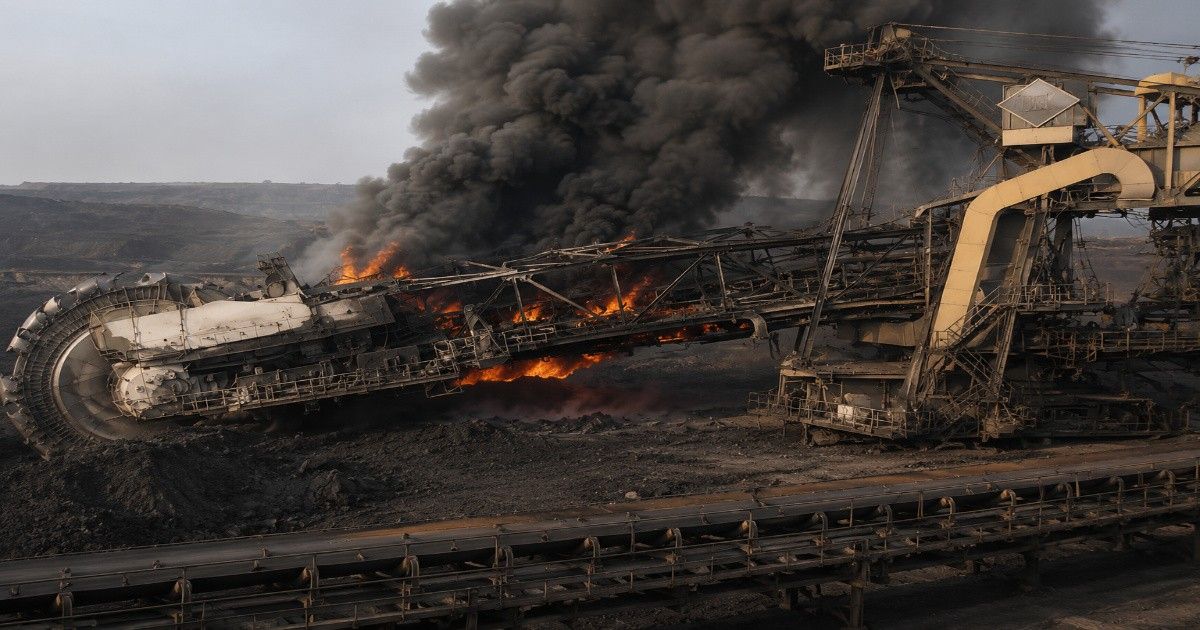
Conveyor belts used in mining operations are vulnerable to fire due to friction, overheated rollers, electrical faults, combustible dust, and hot, dry weather conditions.
Causes of fire in Conveyor Belts
Conveyor belt fires are very dangerous in mines, power plants, cement plants, and material handling systems. A small problem like friction, overheating, or coal dust can quickly turn into a major fire accident.
1. Locked or Jammed Rollers
When conveyor rollers stop rotating properly due to wear, damage, or material buildup, friction between the belt and roller increases significantly. This excessive friction generates heat, which can cause belt overheating, smoke generation, and, in severe cases, fire.
2. Belt Misalignment
Belt misalignment occurs when the conveyor belt moves away from its intended path and rubs against the conveyor structure. Continuous contact creates excessive friction and heat, damages the belt edges, and increases the risk of fire if the problem is not corrected promptly.
3. Pulley Problems
A conveyor pulley can become blocked or jammed while the drive motor continues to operate. Under these conditions, the belt may slip against the pulley surface, generating rapid heat buildup. This can lead to rubber overheating and potentially ignite the conveyor belt.
4. Excessive Coal Dust Accumulation
Coal dust that accumulates around motors, bearings, pulleys, and conveyor galleries presents a significant fire hazard. Dust can easily ignite when exposed to sparks, hot surfaces, or overheating equipment, allowing a small ignition source to develop into a larger fire.
5. Seized Bearings
Bearings that are damaged, worn, or inadequately lubricated generate abnormal heat during operation. As temperatures rise, bearings may seize completely, creating hot surfaces that can ignite nearby combustible materials and start a conveyor fire.
6. Poor Belt Cleaning
When material remains stuck beneath the conveyor belt, it can interfere with normal belt movement and create additional friction between the belt and pulleys. This condition may cause heat generation, belt slippage, equipment damage, and increased fire risk.
7. Electrical Faults
Electrical problems such as short circuits, loose electrical connections, overloaded circuits, and overheated motors can act as ignition sources. Sparks or excessive heat from faulty electrical equipment can ignite coal dust, belt material, or other combustible substances near the conveyor system.
8. Vegetation Near Conveyor Areas
Dry grass and vegetation surrounding outdoor conveyor systems can become highly flammable during hot weather.
A small spark or hot component can ignite nearby vegetation, allowing the fire to spread rapidly to conveyor belts and associated equipment. Regular grass cutting and maintaining safe clearances around conveyors are essential preventive measures.
9. Extreme Summer Heat
High summer temperatures can increase the operating temperature of conveyor components and transported coal or overburden material.
During extreme heat conditions, rollers and bearings may become hotter, coal dust can dry out and ignite more easily, rubber belts may overheat, and the likelihood of spontaneous combustion increases.
Without proper monitoring and maintenance, these conditions can contribute to conveyor belt fires.
Conveyor System Safety
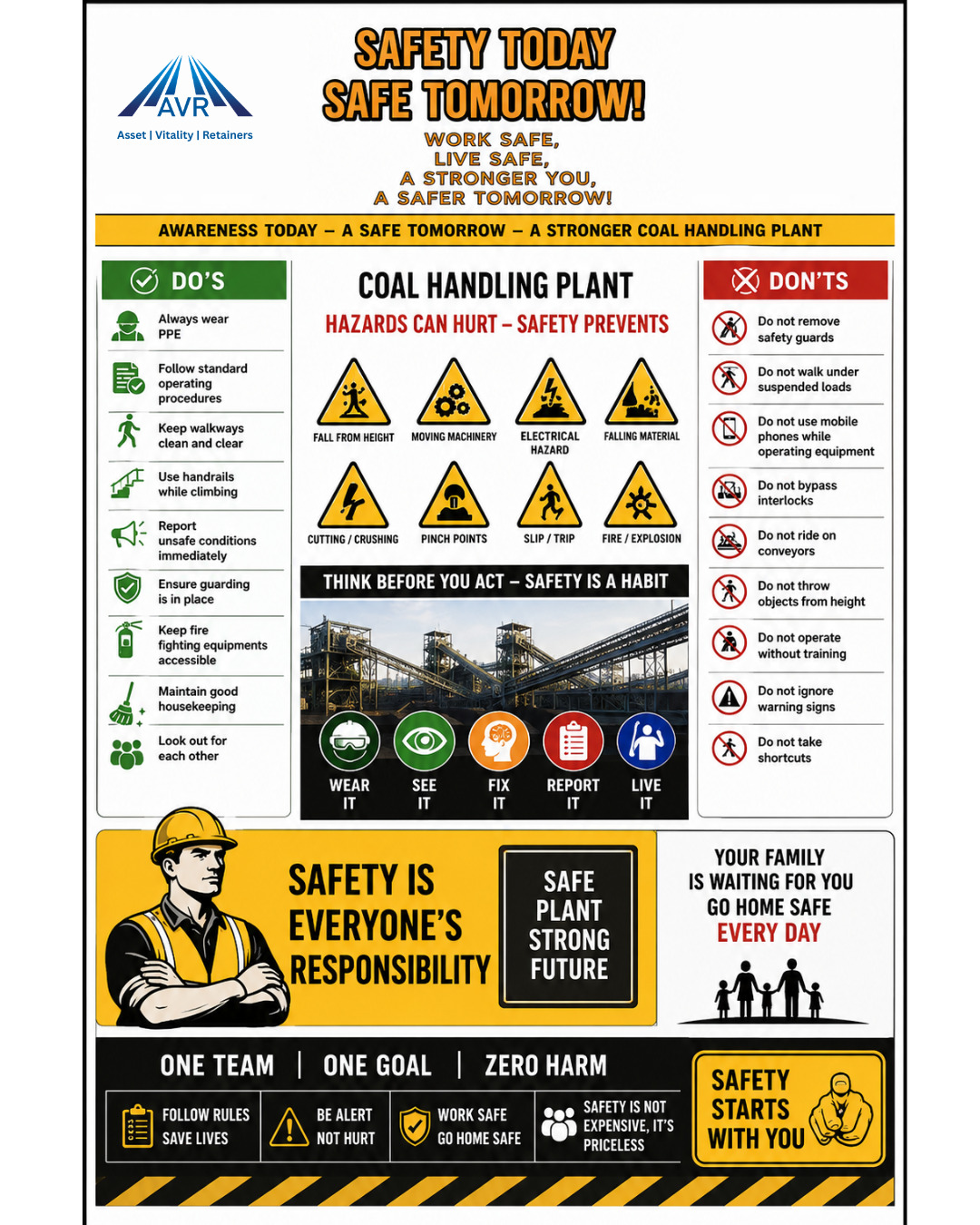
Conveyor system safety is important to prevent accidents, fire, equipment damage, and worker injuries. Regular inspections, proper conveyor system maintenance, and safe operation help keep the conveyor system safe and reliable.
Conveyor Belt Safety
Protecting workers from moving belts, rotating parts, and material hazards is conveyor belt safety. Workers should never stand on moving belts and should always follow safety procedures during operation and maintenance.
Conveyor Belt Safety Devices
Important safety devices used in conveyors
1. Pull Cord Switch: Used for emergency stopping of conveyors from any location.
2. Belt Sway Switch: Detects belt misalignment.
3. Zero Speed Switch: Detects abnormal low speed or belt stoppage.
4. Overload Protection: Protects the motor from overheating and excessive load.
5. Temperature Sensors: Monitor bearing and motor temperature.
6. Smoke & Fire Detectors: Detect fire or overheating inside conveyor galleries.
7. Interlock System: Stops upstream and downstream conveyors automatically during fault.
Conveyor Safety Equipment
-
Fire extinguishers
-
Safety helmets
-
Gloves
-
Safety shoes
-
Dust masks
-
Lockout/Tagout (LOTO) kits
-
Warning alarms and sirens
-
Emergency lighting
Conveyor Safety Switches
Important conveyor safety switches
-
Pull cord switch
-
Belt sway switch
-
Zero speed switch
-
Chute blockage switch
-
Rip detection switch
-
Emergency stop switch
These switches help prevent accidents and equipment damage.
Conveyor Safety Guards
Safety guards are installed to prevent accidental contact with moving parts.
Guarding is required for:
-
Pulleys
-
Rollers
-
Couplings
-
Drive units
-
Rotating shafts
Good guarding helps prevent
Hand injuries
Clothing entanglement
Accidental contact
Conveyor Safety Netting
Safety netting is used
-
Around elevated conveyors
-
Near walkways
-
In loading/unloading areas
Purpose
-
Prevent falling material
-
Protect workers below
-
Reduce injury risk
Conveyor Belt Safety Standards & Regulations
Indian Regulations & Standards
DGMS Guidelines - Safety requirements issued by the Directorate General of Mines Safety for mining operations.
Factories Act, 1948 - Legal framework for worker health, safety, and welfare in industrial facilities.
NBC Fire & Life Safety - Fire protection and life safety provisions from the National Building Code of India.
NFPA 120 - Fire prevention and control guidelines for coal mines.
NFPA 850 - Fire protection recommendations for electric generating plants and high-voltage facilities.
ISO 340 - Standard for flame-resistant conveyor belts.
Plant Safety Rules - Plant-specific operating procedures and safety guidelines.
Conveyor Safety Tips, Rules & Precautions
-
Never stand on moving conveyor belts
-
Do not wear loose clothes near conveyors
-
Follow Lockout/Tagout procedure before maintenance
-
Keep conveyor area clean
-
Report abnormal noise or overheating immediately
-
Never bypass safety switches
-
Use proper PPE at all times
-
Maintain safe distance from rotating parts
Conveyor Safety Inspection Checklist
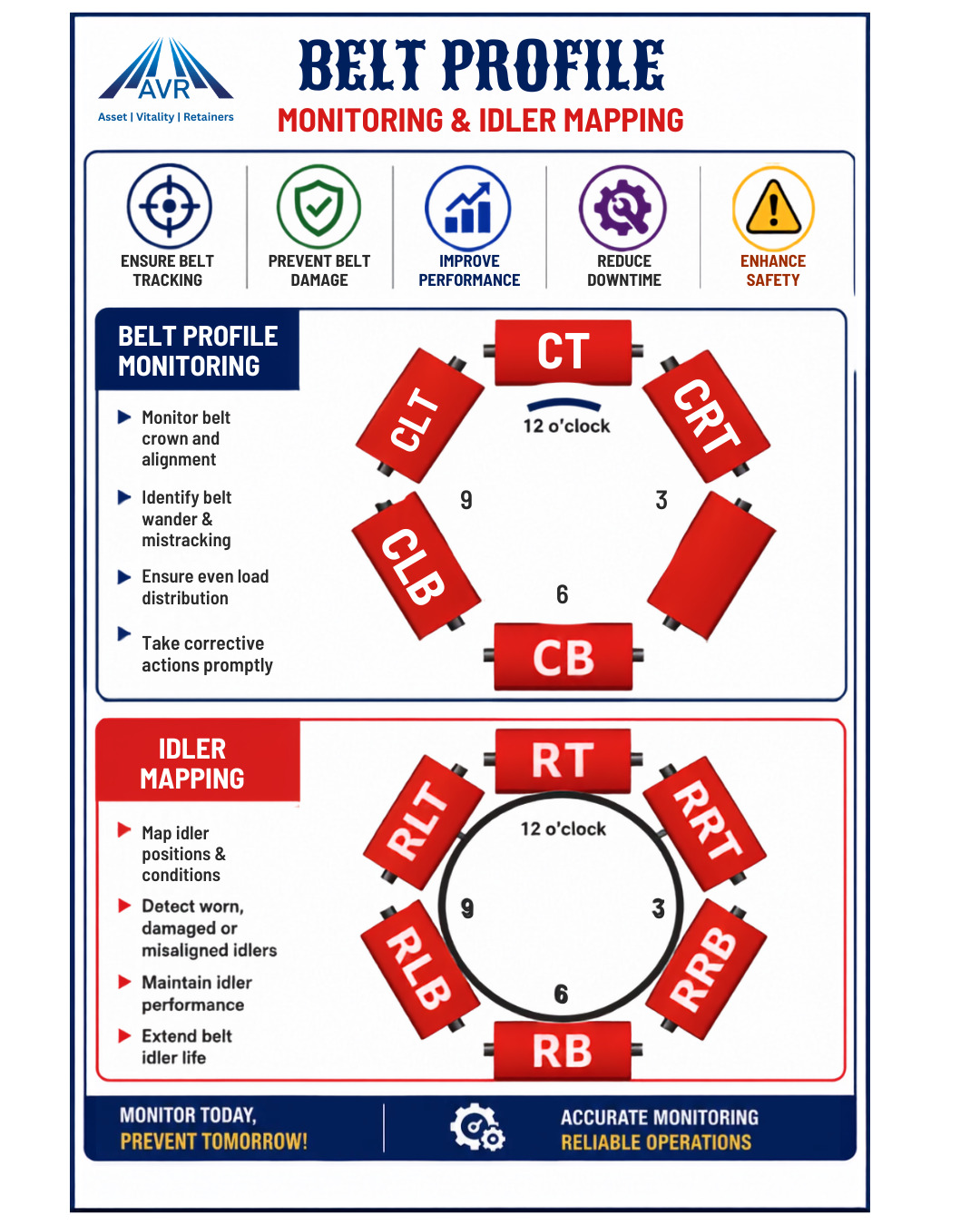
Mechanical Checks
-
Belt alignment condition
-
Roller condition
-
Pulley condition
-
Bearing temperature
-
Belt damage or wear
Electrical Checks
-
Motor temperature
-
Cable condition
-
Emergency switch functioning
-
Panel cleanliness
Safety Checks
-
Pull cord operation
-
Fire extinguisher availability
-
Guard condition
-
Housekeeping condition
-
Dust accumulation
Operational Checks
-
Abnormal vibration
-
Unusual sound
-
Material spillage
-
Belt slippage
Example of Safety Inspection Report
Conveyor Safety Inspection Report
Date: 29-05-2026
Location: Coal Handling Plant
Equipment: Conveyor Belt CB-02
Inspection Findings
-
Belt alignment normal
-
Pull cord switch working properly
-
Minor coal spillage observed near tail pulley
-
One roller found damaged
-
Bearing temperature within limit
-
Fire extinguisher available
Unsafe Condition Identified
-
Damaged rollers may cause overheating if not replaced.
Corrective Action
-
Roller replacement recommended immediately.
Inspector Name & Signature
Example Conveyor Belt Fire Investigation Report
Incident Details
Location: Mine-I, BWE Machine.
Date: Reported in 2026.
Equipment Involved: Conveyor Belt / Overburden Handling System.
Weather Condition: Extreme summer heat.
Basic Incident Telemetry
Facility: Neyveli Open Cast Mine-I
System Affected: Overburden / Lignite Handling Conveyor System
Shift/Environment: Day Shift / Extreme Ambient Summer Heat (40°C+)
Incident Summary
A fire incident occurred in the conveyor system area at Coal Mine-I during normal mining operation. Smoke and flames were observed near the conveyor belt section. The fire was brought under control quickly by the fire and safety team, and no major injury was reported.
Investigation Findings
During inspection, the following conditions were observed:
-
Heat generation near conveyor belt section
-
Coal/lignite dust accumulation around equipment
-
High summer temperature in operating area
-
Signs of friction near conveyor components
-
Conveyor belt surface partially affected by fire
Probable Cause of Fire
The investigation indicated that the fire may have started due to excessive heat and friction generated in the conveyor system during extreme summer conditions.
Accumulated coal/lignite dust and dry weather further increased the fire risk.
Contributing Factors
-
Extreme ambient summer temperature
-
Friction in conveyor belt components
-
Dust accumulation near conveyor area
-
Inadequate cooling and cleaning
Immediate Actions Taken
-
Conveyor system stopped immediately
-
Fire extinguishing system activated
-
Fire and rescue team reached the site
-
Nearby equipment isolated for safety
-
Inspection and maintenance work carried out
Corrective Actions Recommended
-
Increase conveyor inspection during summer
-
Monitor roller and bearing temperature regularly
-
Improve housekeeping and dust cleaning
-
Conduct preventive maintenance properly
-
Install better heat and fire monitoring systems
Fire Safety and Precautions for Conveyor Systems
Regular Inspection
Conveyor belts, rollers, bearings, motors, and pulleys should be inspected regularly to identify overheating, vibration, or abnormal noise.
Housekeeping
Coal dust, material spillage, and waste should be cleaned daily because combustible dust can easily catch fire.
Temperature Monitoring
Bearing and motor temperature should be monitored using thermal scanners or infrared heat sensors to detect hot spots early.
Belt Alignment Check
Misaligned belts create friction and heat. Belt sway switches and alignment monitoring systems should be installed.
Proper Lubrication
Bearings and rotating parts should be lubricated properly to reduce friction and overheating.
Fire Detection Systems
Conveyors should have:
-
Linear Heat Detection (LHD) cables
-
Smoke detectors
-
Infrared heat sensors
-
Flame detectors
-
These systems help detect fire at an early stage.
Fire Suppression System
Automatic water spray or sprinkler systems should be installed near conveyor galleries and transfer points.
Emergency Shutdown System
Emergency pull cord switches and stop switches should be available along the conveyor length for quick shutdown during an emergency.
Electrical Safety
Electrical panels, motors, and cables should be checked regularly to avoid sparks and short circuits.
Summer Precautions
During extreme summer conditions:
-
Increase inspection frequency
-
Monitor hot spots regularly
-
Reduce dust accumulation
-
Improve ventilation around conveyor area
Fire Protection Systems Required for Mining Operations
Smoke Detectors - Detect smoke at an early stage and give warning before fire spreads.
Heat Detectors - Detect abnormal temperature rise near equipment and conveyor systems.
Flame Detectors - Detect flames quickly in high fire risk areas.
Fire Alarm Systems - Alert workers during fire emergencies for quick response and evacuation.
Automatic Sprinkler Systems - Spray water automatically to control fire.
Hydrant Systems - Provide continuous water supply for firefighting operations.
Water Spray Systems - Used near conveyors, crushers, and transfer points to control fire and dust.
Portable Fire Extinguishers - Help control small fires during the initial stage.
Conveyor Fire Detection Systems - Monitor overheating, belt friction, and hot spots in conveyor systems.
Emergency Stop Switches - Stop equipment immediately during emergency situations.
Ventilation Systems - Remove smoke, heat, and harmful gases from mining areas.
Dust Suppression Systems - Reduce coal dust and combustible dust accumulation.
Gas Monitoring Systems - Detects dangerous gases like methane and carbon monoxide.
Emergency Lighting Systems - Provide lighting during power failure or emergency evacuation.
Communication & Evacuation Systems - Helps workers communicate and evacuate safely during fire incidents.
How Often Should Mining Fire Suppression Systems Be Inspected?
Daily Visual Inspection - Check fire extinguishers, hydrants, hoses, detectors, and suppression equipment for any damage, leakage, blockage, or abnormal condition before operation.
Monthly Functional Inspection - Verify the proper operation of fire alarms, heat and smoke detectors, control panels, pumps, and automatic suppression systems.
Quarterly Preventive Maintenance Inspection - Inspect nozzles, valves, piping networks, water spray systems, and fire suppression equipment to ensure reliability and readiness.
Annual Comprehensive Inspection & Testing - Conduct a detailed inspection, performance testing, and certification of the complete fire protection system in accordance with site procedures, manufacturer recommendations, and applicable safety standards.
Post-Incident Inspection - Any fire event, system activation, modification, or major maintenance activity should be followed by a thorough inspection before the system is returned to service.